
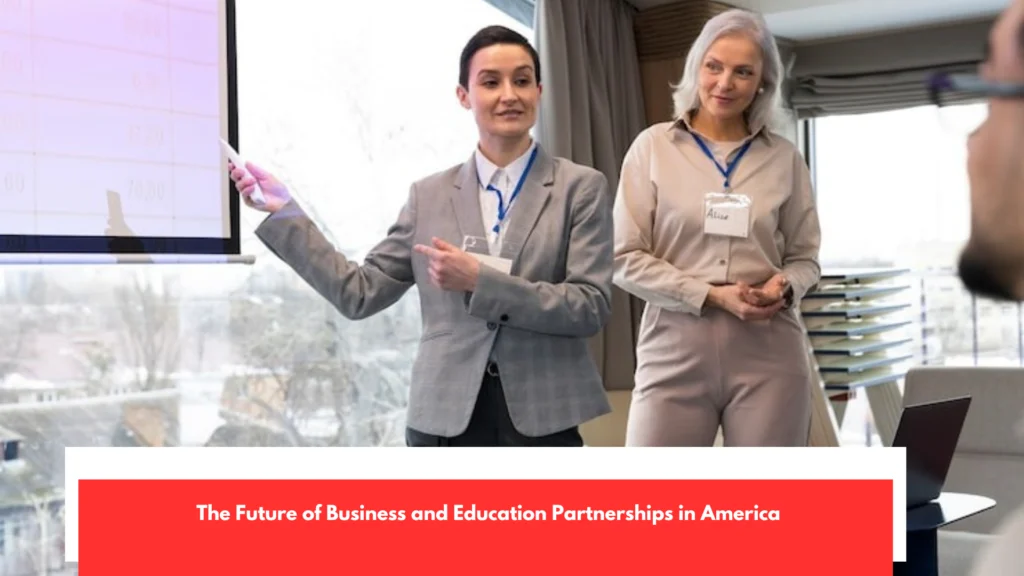
The Future of Business and Education Partnerships in America. And remember the typical embodiment of learning It often involved rows of desks, outdated books and a single course of lecture-hall to diploma. The spheres of business and education have worked separately, and the shift took place at graduation, a few decades ago. Nevertheless, such an outdated notion quickly phased out. There is an evolving, comprehensive collaboration that is taking root all over America. Modern, progressive business is no longer a passive receivers of graduates, it is the active participant, the co-creator, and investor in the educational process.
It is not just a transaction, but a major shift in how we prepare people to work, live and future issues. This partnership changing everything, including the tools that used in kindergarten classrooms and the high-tech studies which are taking place in university laboratories. Such a complex and sometimes painful process of growth eventually creates hope and this makes us ask the question; what does all this deep interconnection between business and education mean about the future of America? Why Businesses are actively participating in Class.
Why Businesses Are Partnering with Education

The Future of Business and Education Partnerships in America. The reason why enterprises invest in education is beyond the altruistic. It is a tactical requirement that is based on survival and growth. The competitiveness of the modern globalized market is very high, and the power of the company depends on the pipeline of talents. When manufacturing and technology to healthcare sectors face high lack of skilled labor, there is no way they can be idle observers who expect the education system to solve the problem.
Such a desire observed in many important ways: Bridging the Skills Gap This is the absolute urgency. The profitability of a company directly influenced by a shortage of the qualified coders, engineers, or trained technicians. By working with institutions of learning, the companies able to ensure that the skills taught matched with the reality skills that are vital in the market. Developing Workforce Preparedness Theory is one thing but negotiating within the dynamics and demands of a modern workplace is a different matter altogether.
The Road Ahead for Business-Education Partnerships

The Future of Business and Education Partnerships in America. The businesses also interested in making sure that the graduates are not only knowledgeable but also have the necessary soft skills including cooperation, communication, and critical thought. Achieving a deeper meaning: The modern consumer and employee convinced that the corporation holds an important meaning. Corporate Social Responsibility (CSR) is now a mandatory position in the firm. Promoting education, especially within the marginalized communities, brings a sense of goodwill, boosts local economies, and prepares a stronger future to all.
The Various facets of a modern Partnership. The collaboration of boardrooms with classrooms is surprisingly diverse and this collaboration takes various traditional and new forms: Internships and Apprenticeships 2.0: Days of doing menial jobs like photocopying and getting coffee are over. Modern apprenticeships paid, structured pathways into skillful trades, but internships increasingly project-based, with the students offered genuine challenges to solve and an actual pile of work. Curriculum Co-Creation Companies are bringing their experts to help in the creation of syllabi capstone projects.
Key Benefits of Collaboration

The Future of Business and Education Partnerships in America. As well as entire degree programs. This will ensure a graduate in data science is trained on the latest software platforms used by the giants in the industry. The EdTech Revolution: Businesses are on the forefront of creating the tools that are fueling modern education, including more footloose interactive learning platforms, as well as virtual reality simulations that allow students to practice more complex surgical procedures.
This is a combination of technology and pedagogy that is producing more engaging and effective learning. Explore Symbiosis: Academic researchers are often innovative, and corporations are often the source of resources and implementation practices required to achieve it. The partnerships around renewable energy, medicines, and artificial intelligence are driving the creation at an unfathomable speed. Facing the Intersection The Problems of Cooperation. This collaboration has justifiable issues and possible disadvantages. Through a good relationship, there should be a continuous awareness and limits.
Balancing Equity and Innovation in Education

The Equity Dilemma Wealthy schools that have high funding are often well-connected to make beneficial partnerships with big tech and financial companies. The danger creates a dualistic platform, as the opportunities of students are determined by their postal code. One of the biggest challenges is ensuring that such collaborations are rolled out to the rural areas and under-funded urban schools. The Commercialization of Education The question that is properly posed by the critics.
Where then should we draw the line The overall goal of education is to develop well-rounded and critical-thinking individuals not only good workers. There is the danger that the curricula can overemphasize vocational training at the expense of the arts and humanities as well as civic education. The Velocity of Change: Technology is changing at an accelerated speed, but educational accreditation and curriculum development are changing at a slow pace. To resolve this inequality, it is paramount to have dynamic partnerships that can easily adapt. The Way Ahead: A Shared Future.