
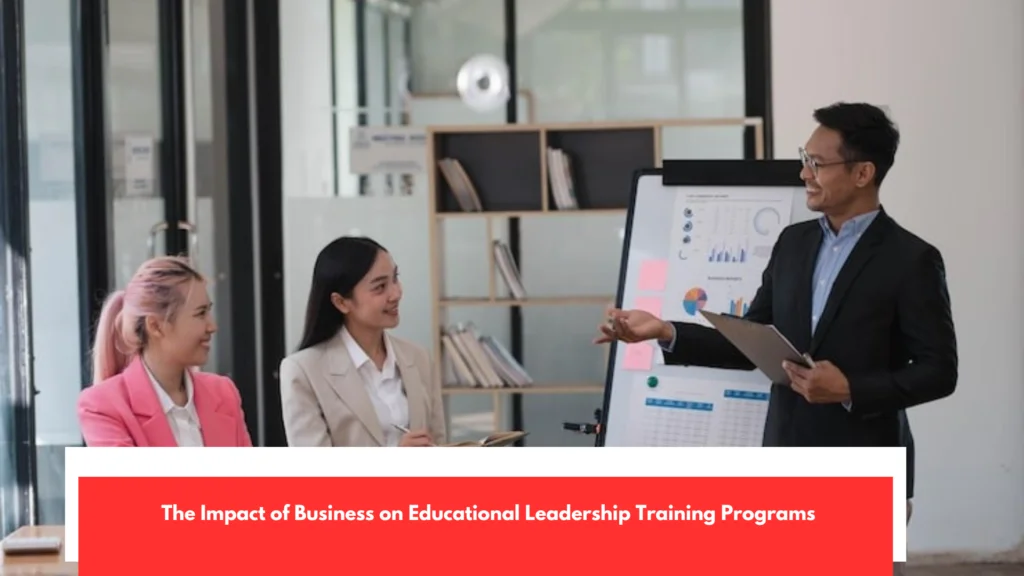
The relationship between the American industry and education has gone a long way past the choice to fund a new football field or even a scholarship. Nowadays, the role of the corporate America in the formation of people who will run our educational institutions is taking a much more strategic and significant role. The executives in the country have realized that the quality of educational leadership can impact not only the test scores but also future employees, local welfare and eventually their future success. This has brought about a major change.
Corporations and privatized enterprises in this regard are emerging as active collaborators in the development of the next generation leaders of principals, superintendents and higher education administrators. They are not investing in educational leadership training as a form of philanthropy, but as an important investment in the ecosystem, which supports their talent pipeline, and shapes the society in which they operate. What is the meaning of a CEO as far as a training of a principal is concerned It might not seem that there is a connection between a corporate CEO and a school system superintendent.
Why Would a CEO Care About a Principal’s Training?

In the case of progressive enterprises, the correspondence is unquestionable and undeniable, however. They understand that an institution that has an active and effective leader produces not only competent but also fluid, courageous, and team players of problems-solving-qualities that are vital in the business world today where competition is a key factor. The power of a practical and idealistic combination influences this engagement: Setting up the Talent Pipeline at the Source.
This is the basic strategic argument. Organizations are investing in the area of leadership development since good leaders create strong educational institutions that produce skilled and well-read professionals. It entails growing the future talent pool at its roots. Authentic Corporate Social Responsibility (CSR): Educating leaders is a very effective way through which a corporation can demonstrate its commitment to the society. It goes beyond PR and is a genuine desire to ensure long-term social development, which builds a lot of goodwill and improves the social license of the company to operate.
How Businesses Are Influencing Training

Building Innovation and Agility: The business environment is changing at an extremely fast pace and companies can teach the organization a lot about flexibility, strategic vision, and efficiency of operations. They claim that the employment of this strategy into leadership in school can improve the capacity of the schools to be responsive to the rapid changes in technology and the society. The Corporate Playbook: The Impact of Businesses in Training. What impact does this have on moving out of the corporate suite to the office of the principal? The cooperation takes different tangible shapes
Strategic Financial Assistance and Resources: The corporations are supporting respected Leadership fellowships, scholarships to future superintendents, and seminars of professional development. This assistance is necessary; it offers those educators who used to be unable to afford further training, conferences, and higher degrees to a larger group, thus, expanding the list of qualified candidates. Giving Back to the Community Business leaders are working together on creating leadership courses with educators. They ensure that the curriculum includes some of the most important 21 st century.
Benefits That Extend Far Beyond

Skills like data-driven decision-making (using metrics to improve student performance), financial literacy (managing complex school budgets), human resources management, skills that are directly relevant in the corporate world to leadership of a multi-million dollar school district. The Significance of Executive Mentorship: Mentorship is one of the most beneficial contributions. An inexperienced principal facing challenges in communicating with stakeholders or strategizing may now be paired with a seasoned Fortune 500 executive to mentor him/her.
This dialogue provides the educators with the much needed practical information on leadership in a transitional period and running of a complex organization. Creation of Leadership Institutions: The companies are joining forces with colleges to institute special leadership institutes. They are institutions that act as platforms and bring together groups of educational managers and business executives to be subjected to serious training. They take part in case studies, share methods of organizational efficacy and build strong professional networks in a wide variety of sectors.
Conclusion

The Ripple Effect: The Benefits That go far beyond. A successful working relationship between the two will have a positive spill over effect in the rest of the community. School leaders become more confident, visionary CEOs of their schools and districts, people who know how to effectively manage staff, budgets, and change. The teachers gain broad perspectives, learning to apply the ideas presented in various companies to overcome the traditional educational challenges through new methods.
The society benefits due to increased interdependence of its key institutions; learning institutions and businesses, whose goals have been harmonized with the development of talent and prosperity in the area. The system becomes more innovative and sustainable as educational leadership takes new ideas into consideration in order to adjust to the rapidly changing environment. Disputing the Problems: Protections against a Strong Partnership.