
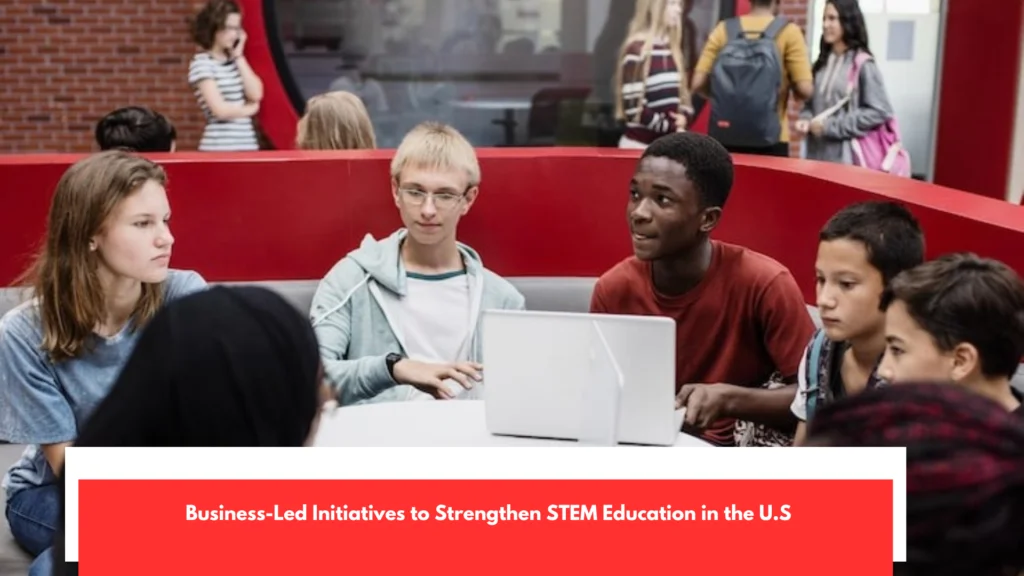
Business-Led Initiatives to Strengthen STEM Education in the U.S. There is a subtle revolution taking place in schools across America. It is no longer a matter of new textbooks, updated lesson plans but is a wholesale and fundamental change in the authorship of these products. Expertise in science, technology, engineering and mathematics (STEM) has moved in the modern knowledge-based economy, no longer a niche competitiveness, but rather a driving force of innovation and national competitiveness.
Schools and colleges are no longer the primary support of education since they no longer carry on with this immense responsibility alone. An American enterprise has raised as a power to reckon with. America companies not just doing philanthropy, but also becoming active contributors to the process of STEM education creation, not only in the technological seaside of Silicon Valley, but also in the manufacturing hub of the Midwestern Region, making sure that the children of today prepared to solve the problems of tomorrow. The Ugliness of the Truth the Revitalization of Education to Business.
The Many Faces of Corporate STEM Support

Business-Led Initiatives to Strengthen STEM Education in the U.S. Corporate America is either idealistically or pragmatically motivated. All industries, healthcare included, driven by innovation and technical expertise. But many people are finding their fuel reserves dying. The United States continues to face a serious skills shortage. In fact, this challenge is marked by a significant lack of skilled professionals in key areas such as data science, cybersecurity, advanced production, and software engineering. It is not a simple matter of hiring challenges but a threat to economic growth and competitiveness on the international level.
An empty engineering job in the business that seeks to break some ground in the field of artificial intelligence or renewable energy may lead to missed opportunities and postponed projects. Therefore, STEM education is not a charity. It is a smart and long-term investment in the safe keeping of the talent pipeline where it will become their future success. It is a perfect example of building the bridge that one expects to cross. In addition to Financial Contributions: Various Facets of Corporate STEM Advocacy. The greatest business activities do not merely limit themselves to money donations.
The Future of STEM Collaboration in the U.S.

They are an indication of deep commitment of resources, time and talent. Intentional Investment Google, Microsoft, and Intel are among the larger companies that have purposeful grants and scholarships, the large majority of which target dynamic, experiential opportunities. This funds robotics and coding boot camps and university research projects which translate theoretical concepts into tangible and exciting projects. Such endeavors bring STEM to life and show students the practical impacts of learning. The Effectiveness of Cooperation The idea of collaboration between.
The government and individual entrepreneurships can lead to major successes. An engineering company can collaborate with a local college to co-create a course on mechatronics to ensure every lesson learned is related to a skill needed in the working environment. These partnerships ensure that learning is flexible and quite responsive to the evolving needs of the modern industry. Mentorship and Practical Experiences: Knowledge is necessary and context is crucial. Corporate mentorship programs connect students to professionals who can offer them critical support, career guidance and understanding.
Business-Led STEM Education Initiatives in the U.S

Of their future lives. Paid internships supplement this idea by putting students into the heart of the experience. In this case, they get practice skills, develop professional confidence, and understand the teamwork nature of solving complex issues. Empowering Educators: The fact is that many companies do not disregard the role of teachers to improve STEM education. Companies like Boeing and ExxonMobil invest in programs of professional development and provide teachers with training and accessibility to sophisticated practices in the industry. When an educator is properly prepared and motivated.
He or she is capable of creating enthusiasm in a number of students during his or her career, which can have a large multiplier effect. Expansion of Inclusion: One of the key goals of such programs is to increase the accessibility of disadvantaged populations, such as women, minorities, and economically disadvantaged students. When corporations offer a fair access to STEM opportunities, they are not only combating inequality but also seeking a range of views. They are aware that teams with different perspectives and experiences are the ones that come up with the most creative solutions.
Building Stronger Societies Through Business

Business-Led Initiatives to Strengthen STEM Education in the U.S. The Consequential Effect of a Fruitful Cooperation. When such partnerships are successful, the benefits create virtuous cycle that makes the whole nation stronger. Students gain clarity, purpose and a path to an otherwise highly sought-after career without the weight of the student debt on their future. The companies gain access to a pool of workforce, which is diversified and job-ready, reduced the costs of recruitment, and direct contact with the innovative or new ideas.
Which have been coined in the academic laboratories. The society enjoys a stronger and more egalitarian economy which is driven by indigenous innovation. Strong local education systems attracts businesses, and skilled workforce creates stronger and wealthier societies. Solving the Challenges with Caution. Such a deep cooperation is not deprived of the justified concerns. These critics accurately enquire as to whether corporate participation may skew the priorities in education to certain corporate interests prejudicing against a holistic education.