
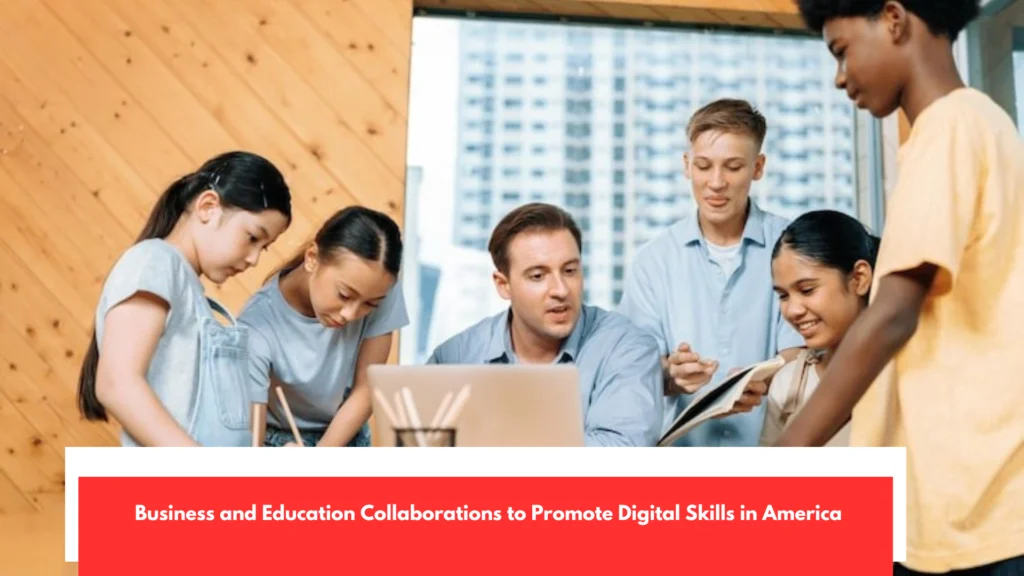
One of the digital companies is currently in dire need of a hired data analyst, carefully looking through hundreds of resumes of people who lack the necessary expertise in coding. A recently graduated college student putting in a lot of applications, frustrated that his general degree not sufficiently prepared them to meet the special demands of the modern labor market. The two realms existed separately over a long time. There is a strong alliance today that bridging this divide and completely changing the manner in which America prepares its people in an economy centred around digital.
The new literacy in the modern world is the digital competencies. They are no longer the safeguard of the IT departments. The ability to exploit technology is now urgent in every domain, whether a farmer can use data analytics to optimize the output of his farm or a marketer can use AI to understand the consumer needs. The result of this shift has created an immediate demand countrywide, which has led to an interesting alliance American business and educational.
Why Digital Fluency is the New American Mandate

Institutions are coming together to ensure that students and employees are not simply ready to enter the future, but are, in fact, making it. The Digital Fluency as an American Necessity in the 21st Century. The motivating factor behind this alliance an economic fact that cannot ignored. The advent of automation, artificial intelligence, and remote work revolution has radically changed the nature of many jobs. Occupations that require computer proficiency in them are increasing at an unprecedented rate, far outpacing traditional occupations.
At present, employers appreciate digital agility in candidates they are looking to hire, i.e. those who can adjust to new technologies, analyse data, and understand the digital environment. This goes beyond just employment, but it is related to national competitiveness. A digital skilled workforce encourages innovation at the grassroots level which creates competition between American enterprises on the global front. It creates a stronger economy.
How Businesses Are Building the Talent Pipeline

Which allows employees to keep achieving adaptability as industries evolve. Online literacy is the stepping stone to high employability, higher income capacity and sustainable career to the individual. The Playbook to Corporate: The Strategies of the development of the Talent Pipeline. Getting familiar with the shortcomings of a shallow talent pool, the forward-thinking American organizations have shifted their focus off talent consumerism to talent producerism.
They have strategic, complex and increasingly crucial participation. Technological Partnerships and Open Education: A whole new breed of instructors has surfaced, in the form of the big companies like Google, Microsoft and IBM. They offer a plethora of free tools, such as Google Career certificates and Microsoft Learn platform, which give a high-demand industry-accepted qualification, such as cybersecurity, data analytics and project management. Educational institutions are increasingly incorporating these resources into their curriculum making students have some practical skills that are marketable.
Evolving the Classroom for a Digital World

Team Learning Training Secondly: Organizations not just trying to get skilled employees, but they engaging in their growth. Corporations collectively come up with training modules and bootcamps alongside other community institutions and universities. These programs carefully designed to specific jobs so that the graduates have an opportunity to take a job and be effective immediately. Funding the Future Scholarships and Grants In a bid to ensure that this scenario is not limited to the wealthy minority, businesses are investing in the necessary funds.
The financial barriers to education are removed by scholarships and grants and ensure that the future of technology will be developed by the diverse group of thinkers and innovators. The Peak of Education: Internships and Apprenticeships: There is no substitute of experience. Internships and apprenticeships that are sponsored by corporations provide the necessary final training. The theoretical knowledge is used by the students to solve the practical problems, create professional contacts, and often to resume full-time jobs. Function of Educational Institutions Digitalizing the Classroom.
Conclusion

It is not a one-sided effort. Education institutions are undergoing a massive revolution, as they are leaving traditional ways and becoming flexible and receptive. The community colleges have played a central role in providing workforce development via the creation of nimble, occupation-focused technical training programs directly with the industry partners in the community. In the field of higher education, universities are partnering with companies in research projects, particularly in more complicated fields like artificial intelligence and machine learning, allowing students to deal with the problems.
That will define the future. At very younger ages, K-12 institutions are incorporating computational thinking and coding, and this forms a basic digital literacy, which will catalyze further learning. The Reasonable Benefits: The Rationale of this Cooperation. The results of such convergence between these two worlds are transformational. The first benefit is the reduction of the skills gap; the graduates have competencies directly applicable, and organizations achieve a reliable personnel channel. Nonetheless, the consequences are more far-reaching.