
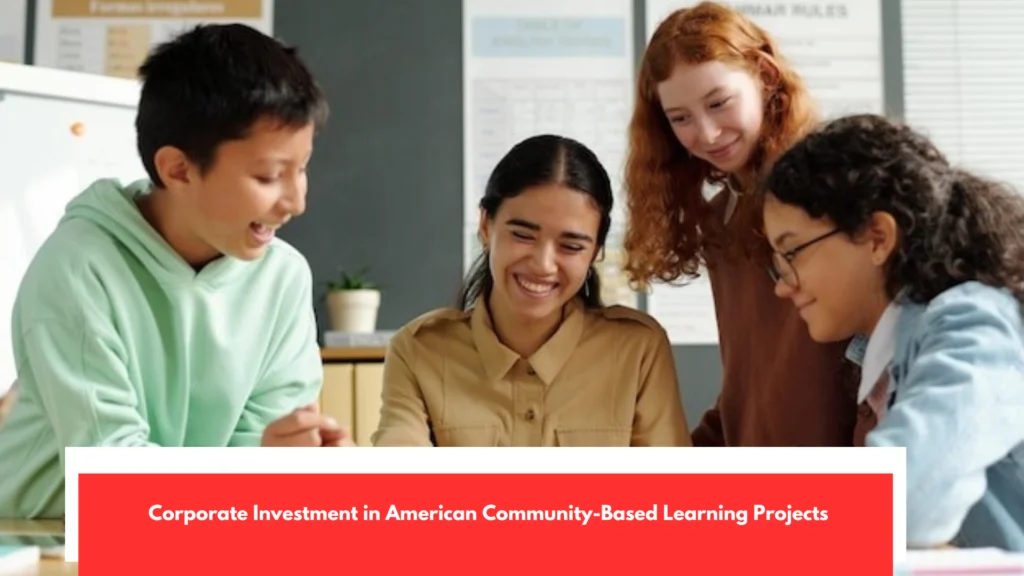
This is the new, shifting face of education in America, although it has a new catalyst that no one could have imagined, corporate investment. Days have been behind us when the involvement of a corporation in education was solely donating money to a university alma mater or running a typical scholarship program. There is a radical change taking place at the moment. The community-based learning (CBL) initiative is our means of active involvement and investment by progressive American firms in the core of our communities. These projects are strong partnerships.
Between local schools, organizations and companies, meant to offer experiential learning opportunities that will prepare kids to life after tests. Defining Community-Based Learning It is experiential learning. Essentially, community-based learning is an education based on real-life interaction. What is revolutionary is the fact that important lessons can be learned not by reading but through experience as one tries to solve real life problems to real people. It sounds that it brings the classroom out in the community and the community into the classroom. These projects are diversity that is reminiscent of the American terrain.
What Are Community-Based Learning Projects?

A technological company can sponsor a robotics club where children play at the national level. A financial literacy program can be funded by a local bank, which will teach adolescents how compound interest and the importance of credit work in the real world. A large media company can also fund a documentary filmmaking project so that young people are empowered to tell the stories of their communities. Collaboration is the binding factor: businesses, teachers, and leaders of communities contribute to the creation of these experiences together to ensure its relevance, effect, and relevance to the needs of locals.
The Case behind the Investment: Not Just PR. Why do companies, which are usually focused on the maximization of their profits, invest so much in local activities? The motives are not only pragmatic but also important. Firstly, and probably most obviously, they are developing their future labor force. American businesses are highly aware of the skills gap that is the gap between the knowledge learned by students and the demands of the modern market.
Why Do Corporations Invest in Community-Based Learning?

By nurturing talent at an early age, companies can grow to have the critical thinkers, problem solvers and technologically savvy innovators that they will need later on in their lives. It is a form of investment in human capital in the long term. Secondly, it is an essential component of a true Corporate Social Responsibility (CSR). Modern consumers and employees expect the organizations that they support to have a moral compass. The promotion of education is a powerful tool of a heartfelt commitment to impacting the society. It goes beyond the nice publicity and includes building.
The long-term trust and building the reputation of a brand as a true friend of the community. Besides, these programs directly bridge the wide gap between education and employment. The end of school and career to some students looks like an act of immersing oneself into the unknown. The channels to CBL projects include compensated internships, mentorship programs that match professionals with students, and job shadowing, through.
Corporate Investments in Community Learning

Which the professionals can see the professional world. This will greatly help in the process of transition and will give the students a sense of confidence in addition to giving them a tangible connection with their future. This association gives all creative impetus. Through the cooperation of enterprises and academics, a feedback of innovative ideas is created. Both corporations learn new information about talent development and establish new trends, whereas educational institutions receive an access to the latest technology, resources, and knowledge that they would not otherwise have access to.
Acting Reality Narratives of the Field. This does not just exist in theory. Look, and thou shalt see these partnerships working The code Next laboratories run by Google provide free, state-of-the-art learning settings to Black and Latinx high school students in urban communities around the country and develop the next generation of computer scientists. Embarking on the concepts of entrepreneurship and financial literacy, Junior Achievement is sponsored by volunteers in many local banks and financial institutions and teaches children with the help of interesting simulations.
Conclusion

Energy companies like DTE in Michigan also support environmental education programs, where students learn of sustainability by building solar panels or rehabilitating their local ecosystems. The Ripple Effects: Improved Students, Thriving Communities. The benefits of this movement are by far far beyond the personal pupil. The students learn some of the crucial hard and soft skills, which improve their employability and self-confidence. The consequences, however, go beyond that. These initiatives are mighty drives to equity. They are able to provide underserved populations with resources.
Networks and opportunities that level the playing field, giving a pathway to children who would otherwise not have access to it. This, in effect, creates a positive loop of the local economy. Educated and talented workforce will draw new business thus improving innovation and making the community more successful to everyone including the corporations that invested in it. Opportunities to face the Challenges with Care. This is a relationship that surely has its tender moments. Opponents are right in their concerns over allowing corporate concerns to overpower the educational education system or create inequalities.