
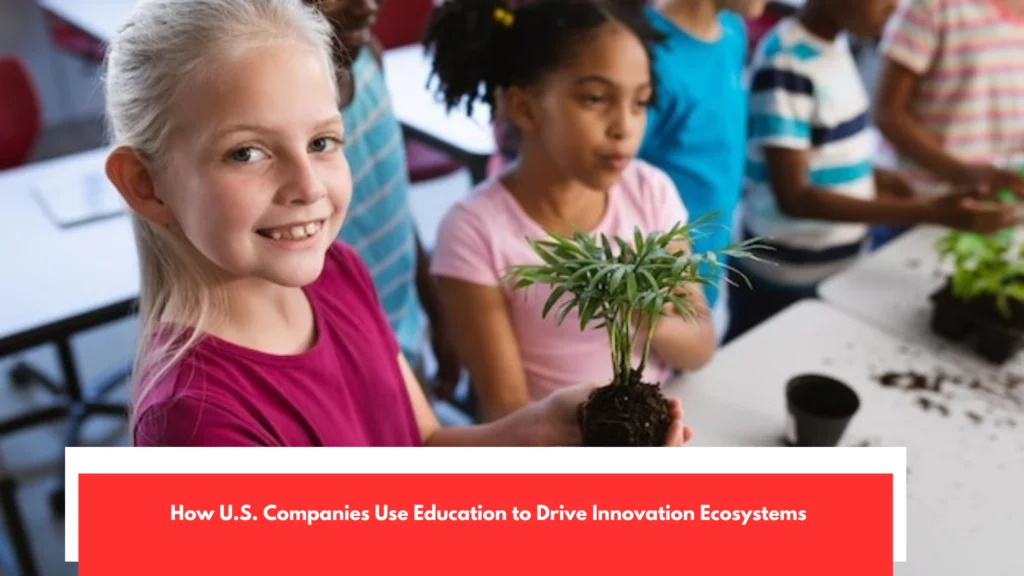
Stepping through the innovation lab of a major organization one gets a sense of energy. Besides students and instructors, engineers working in a foreign technology company can be seen gathered round a prototype. This is not the business takeover of academia; it is the new way of American education. The fast development of industries, which is promoted by artificial intelligence, global competitiveness, and financial shifts, has radically changed the relationship between American corporations and educational establishments. The companies do not see schools and universities.
As the repositories of talent that they will extract once the graduates are through with their assembly line. They are becoming participants in the process as co-creators of the ecosystems that are promoting innovation. It is a win-win situation as educational facilities receive the necessary resources, practicality, and possibilities to their students, and businesses receive a stable stream of highly qualified specialists, who, not only, are talented but also innovative, flexible, and ready to work right away. They are working jointly to build the new engines that will propel the country in the future.
The Strategic Role of Education in Business Growth

The Change of Passive Loyalists to Active Partners: The Relationship Building. The traditional model was clear-cut and precise. The businesses donated money, possibly created scholarships, and took part in career fairs in order to hire graduating seniors. Education was in one place; industry was in another. The old fashioned model is not applicable anymore. At present the differences are very much obscured. Companies are undertaking active investments in education that is intended, not just financial contributions. They are also funding new STD programs, creating holistic mentorship.
Programs starting in high school, and having significant research and development partnerships with university labs. The driving force to this change is a pressing need: the realization that, in order to succeed in a highly complex global economy, organizations need not just be mere consumers of talent; they need to create it. The Logic: The Convincing Business Case of an Investment in Education. It is not just a pure act of charity but a survival and growth strategy.
Balancing Corporate and Educational Goals

The U.S. corporations are motivated by a lot of compelling factors: Workforce Development as a Survival Strategy: The skills gap is an age old debate in the boardroom. The sectors facing high skills shortage are mostly in the technology, healthcare and engineering sectors. Working with teachers will allow creating courses that would equip the students with the relevant, applicable skills needed in such jobs. This is the most effective way through which a reliable talent pipeline will be built. Universities are the centers of innovative and groundbreaking research.
Collaborating with them offers the businesses first hand access to innovation, which allows the co-development of new technologies and transforming the academic excellence into a commercially feasible product or service. Such collaboration with a university laboratory would often be more innovative than a research and development department within the company. Corporate Social Responsibility that has a Long-lasting Impact: The modern consumers and employees expect corporations to be responsible citizens. Among the best ways of demonstrating this is by investing in education.
Universities as Engines of Research and Innovation

It is a long term commitment to the growth of communities that leads to the generation of much goodwill and uplift a firm to the status of an innovative leader. Proactive Recruitment: using internships, apprenticeships and sponsored projects, companies can learn about, and take on top talent before graduation. This is an early entry strong point in the competitive talent professional race. Joint Ventures The Real-World Partnerships of the Future. It is not a concept in the abstract.
Evidence is ubiquitous. Academic giants in Technology: Google, Microsoft, and IBM are leading corporations with well-established partnerships with higher education institutions, sponsoring AI-focused research centers, providing significant cloud computing infrastructure, and developing special degree programs in data science and cybersecurity. Building an Early Passion Corporations sponsor FIRST Robotics competitions, coding boot camps, and K-12 STEM clubs. These attempts are aimed not at quick recruitment, but at the development of curiosity and inspiration of the next generation of innovators.
Conclusion

The pharmaceutical giants collaborate with major medical organizations in conducting clinical trials and research projects, accelerating the process of moving the scientific concept to a life-saving cure or drug. Restoring the Apprenticeship Model Manufacturing and engineering firms are working with community colleges in developing certification programs which not only ensure that a graduate is certified but to the fullest to be employed. Education The core element of the Innovation Ecosystem. Innovation ecosystem is no longer just another jargon, it is a living network.
Where ideas, expertise and capital meet and innovate to drive economic growth. The education is not an element of this system but its essential part. Here is the method The Knowledge Engine Universities are the core of fundamental research which makes the necessary discoveries that can be later taken advantage of and developed by businesses. The Talent Spring They provide a steady stream of young and smart people who are well versed with modern technologies and practices and ready to fill in the necessary roles in both startups and established companies.